
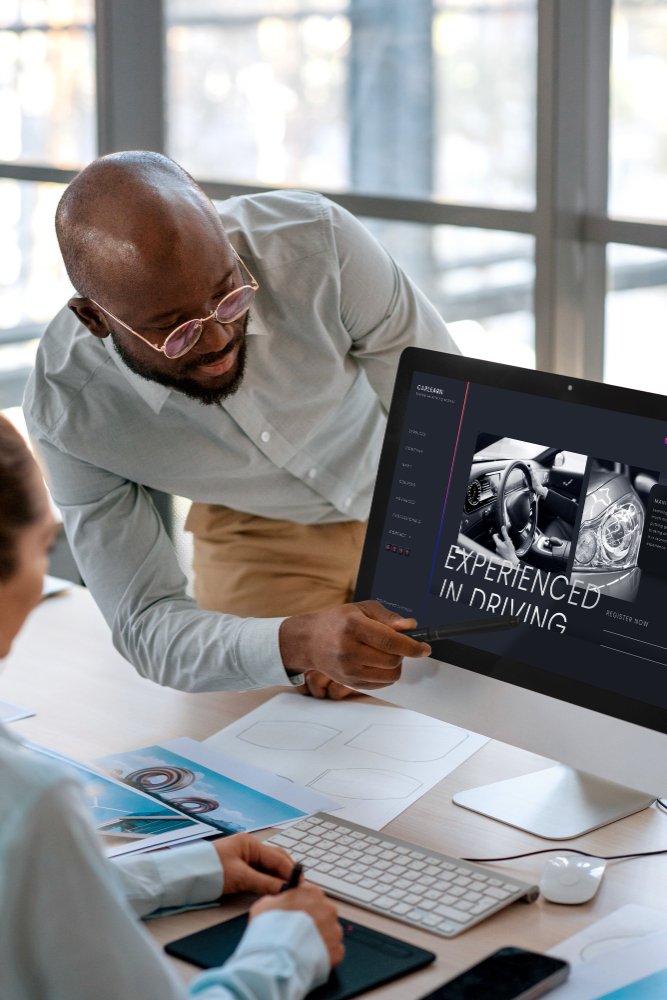
Web Design as a Long Term Skill
Web Design as a Long Term Skill: Why It Remains One of the Most Valuable Investments You Can Make in Africa
Every few years a new wave of conversation emerges about whether web design is still a relevant skill. AI is going to replace designers. No-code tools are going to make professional web design obsolete. Every business will eventually be able to build its own website without any outside help. These arguments have been made in various forms for over two decades and they share a common flaw: they consistently underestimate how much of what makes web design as a long term skill genuinely valuable has nothing to do with the specific tools or techniques of any particular moment.
The designers who have built enduring careers in this field are not the ones who mastered a specific software application or a particular coding language and held on to it for dear life. They are the ones who understood that web design at its core is about human psychology, business strategy, visual communication, and the translation of complex goals into experiences that serve real people effectively. Those things do not become obsolete. They become more important as the digital landscape grows more competitive and more complex.
This guide makes the case for web design as a long term skill with honesty and specificity, examining what makes it durable, how it evolves over time, what the future holds for designers who invest in it seriously, and what separates those who build lasting careers from those whose relevance fades as tools and technologies change.
What Makes Web Design Genuinely Durable as a Skill
The most important thing to understand about web design as a long term skill is what the core of the discipline actually is beneath the layer of tools, platforms, and techniques that visibly evolve from year to year. When you look clearly at what great web designers actually do, the durable foundation becomes immediately apparent.
Great web designers understand people. They understand how human beings process visual information, form emotional responses to design, make decisions under conditions of uncertainty, and navigate unfamiliar digital environments. These are not things that change with software updates or platform shifts. They are rooted in human psychology and cognitive science that has remained fundamentally consistent even as the technologies through which we apply that understanding have changed dramatically.
Great web designers understand business. They can take a business goal, whether that is generating more leads, selling more products, building more credibility, or reaching a new audience, and translate it into a web experience designed to achieve that goal. This capability is not dependent on any specific tool or technology. It is a form of strategic thinking that applies equally to a website built in 1999 and one built in 2025, even though the technologies involved are completely different.
Great web designers understand visual communication. They know how to use colour, typography, space, imagery, and layout to communicate meaning, create emotional responses, and guide attention in deliberate ways. This visual literacy is a transferable skill that applies across every medium and every platform, digital or physical, and it becomes more rather than less valuable as the volume of visual content competing for people’s attention grows.
These three foundations, understanding people, understanding business, and understanding visual communication, are the durable core of web design as a long term skill. Everything else, the specific tools, the current design trends, the dominant platforms, the prevailing technical standards, changes continuously. But these foundations remain as relevant and as valuable as they have always been, which is why designers who invest in developing them deeply build careers that outlast every wave of disruption that the industry experiences.
How Web Design Has Evolved and What That Evolution Tells Us About the Future
Understanding web design as a long term skill requires looking honestly at how the discipline has evolved over the past two decades and what that pattern of evolution suggests about where it is heading.
In the early days of the commercial web, web design was primarily a technical skill. The designers who were most valued were those who understood how to write HTML and make things appear correctly in a browser. The creative and strategic dimensions of web design were relatively underdeveloped because the market for sophisticated web experiences was itself underdeveloped.
As the web matured and as more businesses came to depend on their online presence for commercial outcomes, the strategic and experiential dimensions of web design became progressively more important. It was no longer enough to make something that worked technically. It had to work strategically. It had to serve specific audiences effectively. It had to rank on search engines. It had to load quickly on mobile devices. It had to convert visitors into customers. Each of these requirements added a layer of sophistication to what web design needed to deliver, and each of these layers created demand for designers who could think beyond the technical execution of a layout.
This evolutionary pattern has one clear implication for the future. As the digital landscape continues to grow more competitive, the bar for what constitutes effective web design will continue to rise. The businesses that are winning online in five years will be working with designers who combine deeper strategic insight, more sophisticated understanding of human behaviour, more rigorous technical capability, and more nuanced business acumen than most designers currently bring to their work. The skill set required to succeed in web design is not shrinking. It is expanding and deepening, which is the most reliable possible signal that web design as a long term skill has a strong and growing future rather than a contracting one.
The Question of AI and What It Actually Means for Web Designers
No honest conversation about web design as a long term skill can avoid the question of artificial intelligence and what it means for the profession. AI tools are already changing how web designers work and that change will accelerate. The question is whether that change represents a threat to web design as a career or a shift in how the skill is applied.
The honest answer is that AI is already automating certain parts of web design work, specifically the most mechanical and repetitive parts. Generating initial layout options, creating placeholder content, producing variations on a visual theme, writing basic code for standard components. These are things that AI tools can do with increasing sophistication, and designers who spend most of their time on these mechanical tasks will find AI a genuine competitive threat.
But the parts of web design that create the most value for clients are not the mechanical parts. They are the strategic judgment about what a specific business needs its website to achieve. They are the empathetic understanding of how a specific audience thinks and feels and what they need to experience in order to trust a specific brand. They are the creative synthesis of business requirements, audience insights, and visual communication principles into an experience that is not just functional but genuinely compelling. They are the client relationship, the discovery process, the translation of vague business goals into concrete design requirements, and the navigation of the feedback and revision process that turns a first draft into a final product that the client is genuinely proud of.
None of these things are things that AI can do, not because AI is incapable of generating outputs that superficially resemble them, but because their value is inseparable from the human judgment, contextual understanding, and genuine creative intelligence that produces them. A website designed by a skilled web designer who understands a specific African business, its specific market, its specific customers, and its specific competitive context will consistently outperform one generated by an AI tool that has none of that contextual understanding, regardless of how visually impressive the AI-generated output appears.
The designers who should be concerned about AI are those whose entire value proposition is the mechanical execution of web design tasks. The designers who will thrive in an AI-augmented world are those who use AI tools to accelerate the mechanical dimensions of their work while doubling down on the strategic, empathetic, and creative dimensions that AI cannot replicate. This is not a new dynamic in the history of design. Every major technological shift in the tools available to designers has raised the same concerns and produced the same outcome: the designers who adapted and invested in the dimensions of their practice that technology could not replace thrived, while those who held on rigidly to displaced approaches struggled.
Web Design in the African Context: A Skill With Particular Long-Term Value
The long-term value of web design as a long term skill is particularly strong in the African context for reasons that are specific to where the continent is in its digital development journey. Understanding these reasons gives designers in Kenya and across Africa a clear picture of why investing seriously in this skill now positions them exceptionally well for the next decade and beyond.
Africa is in the early to middle stages of its digital transformation. Internet penetration is growing rapidly but remains significantly below the levels of more mature digital markets. The proportion of African businesses with genuinely professional web presences is still small relative to the total business population. And the sophistication of what African businesses expect from their web presence is growing quickly as more business owners see the commercial results that well-designed websites deliver for their peers and competitors.
This means that the market for professional web design services in Africa is not approaching saturation. It is growing. The businesses that will be investing in professional web design in five years include many that currently have no web presence, many that have basic template websites that will need to be replaced as their businesses mature, and many that are currently satisfied with their web presence but will not remain satisfied as their competitors raise the bar.
For designers in Kenya and across Africa who invest seriously in web design as a long term skill now, this growth trajectory means they are building expertise in a market that will reward that expertise increasingly generously over time. The designers who develop genuine strategic and creative capability, who understand African audiences deeply, who can integrate local payment systems and cultural context into their work, and who build strong reputations in the markets they serve will find that the value of what they offer grows alongside the market rather than being diluted by it.
Our guide on web design jobs and career opportunities in Kenya explores the specific dimensions of this market opportunity in detail and is worth reading alongside this guide for anyone building a career in the Kenyan and African web design space.
How to Invest in Web Design as a Long-Term Skill Strategically
If you are convinced of the long-term value of web design as a long term skill, the next question is how to invest in it most strategically so that the capability you build today compounds in value over time rather than becoming obsolete as specific tools and trends evolve.
The most important investment you can make is in the foundational dimensions of the skill that we have already identified as genuinely durable. Invest deeply in understanding human psychology and how people interact with digital experiences. Invest in developing your visual design fundamentals beyond the level of software proficiency into genuine design literacy. Invest in understanding business strategy and how design decisions serve commercial outcomes. And invest in developing the communication and relationship management skills that determine whether your professional practice is trusted and referred by the clients you serve.
These investments do not have a specific curriculum or a defined endpoint. They are ongoing commitments to learning and development that deepen over an entire career. Every project you take on is an opportunity to develop these capabilities further if you approach it with genuine curiosity and honest reflection about what worked, what did not, and what you would do differently.
Alongside these foundational investments, maintain a practice of staying current with the evolving dimensions of the field without becoming anxiously dependent on any specific tool or trend. New design tools, new development frameworks, new platform capabilities, and new design conventions emerge continuously. The designers with strong foundations can adapt to these changes efficiently because they are adding new tools to a stable base of understanding rather than rebuilding their practice from scratch every time something changes.
The relationship between what good web designers do differently and the long-term success of their careers is direct and significant. The habits and thinking patterns that distinguish genuinely excellent designers are the same ones that make a web design career durable and growing rather than fragile and stagnating.
The Compounding Returns of Long-Term Investment in Web Design
One of the most compelling arguments for web design as a long term skill is the way that investment in it compounds over time in ways that are unusual compared to many other professional skills.
As a web designer accumulates experience, every project they take on builds on everything that came before. The understanding of what works for specific types of audiences, the refined judgment about design decisions, the pattern recognition that allows experienced designers to quickly identify what a project needs, the reputation that generates referrals without active marketing effort. All of these compound with time in ways that make an experienced designer substantially more valuable and more effective than their hours of work alone would suggest.
This compounding effect means that the return on the early investment in developing web design skills grows significantly over time rather than depreciating. A designer with ten years of serious practice is not simply a designer with ten years more experience than a beginner. They are a fundamentally different kind of professional who can see and solve design problems with a depth of insight that cannot be replicated by any amount of accelerated learning. That depth of insight is what premium clients are willing to pay premium rates for, and it is what makes established web design professionals among the most commercially secure people in the technology sector.
For designers in Kenya and across Africa who are making decisions now about where to invest their professional development effort, this compounding dynamic is one of the most powerful arguments for committing seriously to web design as a long-term career rather than treating it as a stepping stone to something else or as a side skill to maintain casually alongside other pursuits.
Building a Practice That Grows in Value Over Time
The ultimate expression of web design as a long term skill is a professional practice that becomes more valuable over time rather than simply sustaining itself. This means building not just the technical and creative capabilities that produce good work but the reputation, the systems, the client relationships, and the market positioning that make a practice genuinely differentiated and genuinely difficult to replicate.
The designers who achieve this level of practice development in Kenya and across Africa are those who approach their careers with the seriousness and long-term thinking of an entrepreneur rather than simply the daily focus of a craftsperson. They think strategically about which types of clients they are best positioned to serve and which types of projects will build their reputation most effectively. They invest in their own professional presence and positioning with the same care they invest in their clients’ presences. They build processes and systems that allow their practice to deliver consistently at a high level rather than depending entirely on their personal effort on every project.
They also think about the communities they are part of and the contributions they can make to the broader development of professional web design in Africa. Sharing knowledge, mentoring less experienced designers, contributing to conversations about standards and practice within the industry. All of these activities build reputation and relationships that enhance the long-term value of a practice in ways that go beyond any individual project or client relationship.
At AfricanWebExperts, this long-term thinking about what we are building and what our practice stands for in the African market has shaped every significant decision we have made. We are not just building websites. We are building a practice that we hope raises the standard of professional web design across the continent and creates genuine, lasting value for every business we work with.
Frequently Asked Questions
Will AI eventually replace web designers completely?
The honest answer is no, at least not in any foreseeable future and not for the dimensions of web design that create the most value. AI will continue to automate mechanical and repetitive tasks within the web design process, which will change how designers spend their time and what skills they need to develop. But the strategic thinking, the empathetic understanding of specific audiences, the creative synthesis of complex requirements into compelling experiences, and the human relationships that make web design genuinely valuable to clients are not things that AI can replicate. Designers who invest in these dimensions of their practice will find AI a useful tool rather than an existential threat.
How many years of experience does it take to build genuinely deep expertise in web design?
Genuine depth of expertise in web design, the kind that commands premium rates and produces consistently excellent outcomes across a wide range of project types, typically takes between five and ten years of serious practice to develop. This timeline varies based on the quality and intensity of the practice, the breadth of projects undertaken, and the deliberateness with which the designer reflects on and learns from their experience. There is no shortcut to genuine expertise but there are approaches to learning and practice that accelerate its development.
Is web design a good long-term career investment for someone in their thirties or older in Kenya?
Absolutely. Web design is one of the most age-independent professional skills available because its value comes from experience, judgment, and developed expertise rather than from physical capability or proximity to formal education. A designer who begins seriously investing in web design skills at thirty and builds their practice consistently over the following decade will have, by forty, a depth of professional capability and a quality of client relationships that represent a genuinely valuable and financially rewarding career asset. There is no point at which beginning to invest seriously in web design as a long-term skill is too late.
How do I keep my web design skills relevant as the field evolves?
The most effective approach is to maintain a clear distinction between the foundational dimensions of your skill that are genuinely durable and the specific tools and techniques that evolve continuously. Invest heavily in the durable foundations including design thinking, business strategy, and human psychology while maintaining an active practice of staying current with evolving tools, technologies, and design conventions. Engage regularly with the design community through professional networks, industry publications, and peer learning relationships. And approach every project as an opportunity to learn something new rather than simply applying what you already know.
What is the single most important investment a web designer can make for long-term career success?
Building genuine expertise in the strategic dimensions of web design, specifically the ability to understand a client’s business deeply and design experiences that achieve specific commercial outcomes, is the single most important long-term investment a web designer can make. This strategic capability is what commands premium rates, generates strong referrals, and makes a practice genuinely differentiated in a competitive market. Everything else, technical skills, software proficiency, design trends, evolves continuously and can be updated. The strategic judgment to connect design decisions to business outcomes is the rarest and most valuable thing a web designer can offer.
Web Design Rewards Those Who Commit to It Deeply and for the Long Term
Web design as a long term skill is not a gamble on a technology that might become obsolete. It is an investment in a discipline whose core value, understanding people, understanding business, and understanding visual communication, is as relevant and as commercially important as it has ever been and is likely to become more so as digital competition intensifies across Kenya and Africa.
The designers who commit to this skill deeply and for the long term, who invest in the durable foundations that no technological shift can displace, who build reputations for excellence and integrity in the markets they serve, and who approach their practice with the strategic thinking of a business builder rather than simply the execution mindset of a craftsperson, are building something genuinely valuable. They are building careers that grow in value over time, practices that compound in reputation and capability, and professional identities that represent something specific and worth choosing in a competitive market.
At AfricanWebExperts, this long-term commitment to the craft and the strategy of web design is what defines everything we do for the businesses across Kenya and Africa that trust us with their online presence.
👉 Get your free quote on WhatsApp and let us show you what long-term investment in web design excellence looks like when it is applied directly to your business.
Or visit our Contact page and one of our experts will be in touch with you shortly.